Molecular Lab Equipment's
Robotic liquid handling technology in automated DNA extraction systems can streamline the tasks involved in isolating DNA or RNA from a sample, such as serial dilution and cherry-picking. These specialized instruments are well-suited for improving sample throughput and minimizing labor-intensive manual tasks, like pipetting and dispensing. Systems typically also include functions such as shaking, temperature control, and PCR protocols. DNA extraction or purification is used in many aspects of biological research including molecular biology, sequencing, forensics, pathology, environmental research, and drug discovery. Features to look for in choosing an automated DNA extraction system include integration with laboratory information management systems, full start-to-finish automation, error control, and safeguards against contamination.

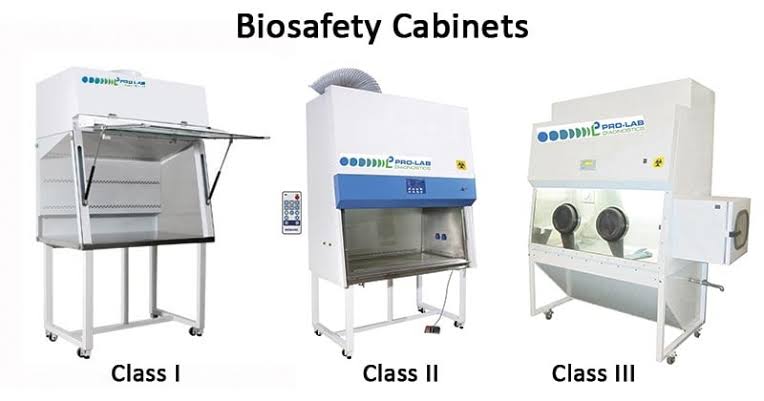
Biosafety cabinets (BSCs) are one type of biocontainment equipment used in biological laboratories to provide personnel, environmental, and product protection. Most BSCs (e.g., Class II and Class III) use high efficiency particulate air (HEPA) filters in both the exhaust and supply system to prevent exposure to biohazards.
There are several designs of biosafety cabinets which provide different levels of protection to the worker and to the research material. There are three classes of biosafety cabinets designated in the United States: Class I, Class II, and Class III. Class I biosafety cabinets are infrequently used and provide personnel and environmental protection but no product protection.
PCR machines, or thermocyclers, amplify DNA by regulating temperature in cyclical programs. A crucial tool in molecular applications, these highly specialized instruments progressively enjoy advancements in design and mechanics over time, such as enhancements in lid security, heat block reliability, hardware functionality, and more. Blocks become easily interchangeable to accommodate various sample formats, such as single tubes, strip wells, and multi-well tubes. Some models also feature dual or multi-blocks that operate independently to handle multiple, simultaneous experiments. The temperature range of most PCR machines generally fall between 4°C to 99°C, while complex instruments can cool down to as low as 0°C. The heating rate determines the speed at which thermal cycling can occur and generally ranges between 3°C to 6°C.

A vortex mixer, or vortexer, is a simple device used commonly in laboratories to mix small vials of liquid. It consists of an electric motor with the drive shaft oriented vertically and attached to a cupped rubber piece mounted slightly off-center. As the motor runs the rubber piece oscillates rapidly in a circular motion. When a test tube or other appropriate container is pressed into the rubber cup (or touched to its edge) the motion is transmitted to the liquid inside and a vortex is created. Most vortex mixers are designed with 2 or 4-plate formats, have variable speed settings ranging from 100 to 3,200 rpm, and can be set to run continuously, or to run only when downward pressure is applied to the rubber piece.

A vortex mixer, or vortexer, is a simple device used commonly in laboratories to mix small vials of liquid. It consists of an electric motor with the drive shaft oriented vertically and attached to a cupped rubber piece mounted slightly off-center. As the motor runs the rubber piece oscillates rapidly in a circular motion. When a test tube or other appropriate container is pressed into the rubber cup (or touched to its edge) the motion is transmitted to the liquid inside and a vortex is created. Most vortex mixers are designed with 2 or 4-plate formats, have variable speed settings ranging from 100 to 3,200 rpm, and can be set to run continuously, or to run only when downward pressure is applied to the rubber piece.